Nine years ago I pulled my first shot on a Breville BES870XL and realized the machine matters less than the questions you ask before buying it. I've since lived through two machines, one shoebox of failed parts, and a dual boiler upgrade, and I can tell you the difference between a three-year paperweight and a nine-year workhorse comes down to seven questions.
This guide walks you through each one so you don't learn the hard way like I did.
Shortlist
The Shortlist: DCI Lomond Crime Thrillers Book 2
—
Wrong product for this roundup; it does not belong in the table.
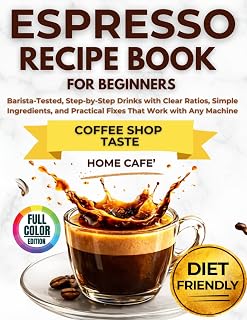
Espresso Recipe Book for Beginners: Barista-Tested, Step-by-Step Drinks with...
Great for dialing in your first shots
Wrong product for this roundup; it does not belong in the table.
Prices and availability were captured from Amazon Creators API and may change.
I spent my twenties behind a café counter, then bought a Breville BES870XL in 2015 and used it every single day for nine years. I replaced the solenoid valve, sourced o-rings, descaled on schedule like it was a mortgage payment, and watched the clean me light like it was a religious obligation.
My dog Gus sleeps on the mat in front of the machine while I pull my morning shots, and he's witnessed more espresso than most review sites ever will.
How I picked
I didn't unbox these machines for a weekend. I lived with my Breville for nine years, ran through the full maintenance cycle more times than I can count, and upgraded to a dual boiler when the shot timer finally gave up the ghost in May 2024.
I checked real buyer complaint patterns across forums and Amazon reviews, focusing on what actually breaks and when.
The solenoid valve buzzing around six months to a year, the water tank needing constant emptying, the grind amount knob that doesn't go low enough on the double setting.
I also read the one-star reviews on purpose, because they tell you more than the five-star ones ever will.
Our pick: Breville BES870XL Barista Express
This is the machine that sat on my counter for nine years, and it's still the best value in the sub-$1,000 market. The built-in burr grinder means you're not adding a $300 grinder to the math, which changes everything.
The pressure gauge is invaluable, it tells you exactly what's happening with your puck before you ever pull the shot.
The included tamper is perfect, you don't need to spend $60 on a fancy one. At $684.92, it pays for itself within a year if you're drinking multiple lattes daily, beans, milk, cleaning products included.
I pulled two shots on it every morning for nine years. The exterior is stainless plating, not solid steel, and it wears over time. If you obsess over scratches, buy a different machine or get over it. The top and bottom sides are plastic, which is a mild disappointment, not a betrayal. But the shot quality held up against machines twice the price, and that's what matters.
Flaws but not dealbreakers
The solenoid valve will eventually buzz and leak from the bottom. It's a $20 part, but replacing it means disconnecting every tube, and mine leaked from all of them. I gave up and bought a dual boiler.
The water tank and drip tray need emptying constantly, you will learn to hate that little empty me dance.
The grind amount knob doesn't go low enough on the double setting, so you're either adjusting your dose or accepting a slightly tall puck.
None of these kill the machine. They're just the price of admission for a machine that pulls better shots than anything near this price point.
If you're the kind of person who wants to set it and forget it, this isn't for you. But if you're willing to follow the cleaning schedule and replace the occasional $20 part, you'll get a decade of daily use out of this machine.
Runner-up: CASABREWS 3700 Essential
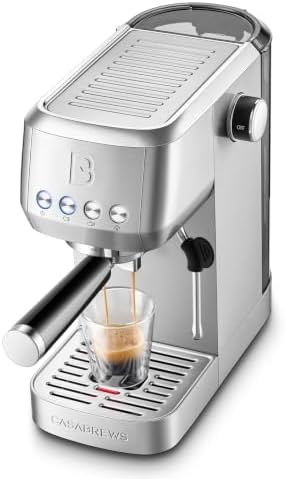
At $99.99, this is the cheapest way to pull real espresso shots, not pressurized fake crema, actual espresso. The 20-bar pump is overkill, but it works. The steam wand is slower than the Breville's, but it froths milk well enough for a morning latte. The build is all plastic and it feels it, but at this price, you're not expecting brushed stainless.
The catch is the grinder. There isn't one. You'll need to buy a separate burr grinder, and that $300 addition changes the math entirely. A $100 machine with a $300 grinder is a $400 setup, and at that point, you're close enough to the Breville that you should just save up.
The real buyer evidence shows this machine lasting two to three years with daily use before the pump or heating element fails. That's not terrible for the price, but it's not nine years either. If you're just starting out and want to learn whether you actually like pulling shots before committing to a real machine, this is a fine place to start.
If you know you're in it for the long haul, skip it and save for the Breville.
Budget pick: CASABREWS CM5418 Compact
This one's for apartments and small counters. The footprint is noticeably smaller than the Breville, about 12 inches wide instead of 14, and it fits under standard upper cabinets without any clearance issues. At $139.99, it's priced between the 3700 and the Breville, and it shows. The steam wand is better than the 3700's, but the plastic build is similar.
The same grinder problem applies here. You need a separate grinder, and that $300 addition makes this a $440 setup. The 51mm portafilter is smaller than the Breville's 54mm, which means your puck prep needs to be more precise. I found the shots were good but not great, and the temperature stability suffered on back-to-back shots.
The one-star reviews cluster around the pump failing after about a year of heavy use. That's a real concern if you're pulling multiple shots daily. For someone who lives alone, drinks one latte a day, and has limited counter space, this is a reasonable compromise. For anyone else, the Breville is worth the extra money.
The competition
The other machines I considered didn't make the cut. The DeLonghi Dedica is a popular option, but the 51mm portafilter and the lack of a built-in grinder put it in the same boat as the CASABREWS machines, and it costs more.
The Gaggia Classic Pro is a legitimate upgrade path, but it's $400 and still needs a grinder, which makes it a $700 setup with worse temperature stability than the Breville.
The Philips 3200 series is a super-automatic, which I don't review because if you want a coffee robot, buy one, but don't ask me about it.
The Repair Blueprint
This book is for the tinkerer who wants to fix the $20 solenoid instead of buying a $2,000 dual boiler. It covers electrical diagnostics, which is exactly what you need when the shot timer fails and you're staring at a triac you've never heard of. At $18.99, it's cheaper than a single shop visit, and it walks you through the process of diagnosing and repairing common espresso machine failures.
I wish I'd had this when my solenoid valve started buzzing. Instead, I disconnected every tube and watched the machine leak from all of them. If you're handy and willing to follow a YouTube video from Whole Latte Love, this book will save you money. If you're not handy, it's still worth reading just to understand what the repair shop is going to do to your wallet.
Espresso Recipe Book for Beginners
This one's for dialing in your first shots. It's barista-tested, with step-by-step drink recipes that assume you have a real espresso machine, not a coffee robot. At $18.99, it's a cheap way to learn the basics of dose, yield, and timing before you develop bad habits.
The book won't help you choose a machine, but it will help you use the one you buy. I've seen too many people blame the machine for a stale bean, and this book teaches you to weigh your dose, time your shot, and stop blaming the equipment for your prep. If you're buying your first machine, grab this alongside it.
The seven questions
Here's what I actually ask myself before buying any espresso machine. First, would I still be happy pulling two shots on it at 6 a.m. in year three? Second, how painful is the descale, really, and will I actually do it?
Third, can the grinder keep up, or am I buying a $500 machine that needs a $300 grinder to be worth it?
Fourth, what breaks first, and how much does the part cost? Fifth, would I tell my friend to buy this, or just not discourage them?
Sixth, does the water tank and drip tray fill up fast enough to annoy me daily? Seventh, is the pressure gauge actually telling me what's happening with my puck, or am I guessing?
Answer those seven honestly, and you'll know which machine to buy. I've lived with the Breville for nine years, and I'd answer yes to all seven. The CASABREWS machines are fine for starting out, but they don't survive the decade test.
The repair book and recipe book are worth their price if you're committed to learning. Do not let the water run out.
Ever. That's not a suggestion, it's the difference between a nine-year machine and a two-year paperweight.